



I got into NYU with a 3.2 GPA. No test scores, no clubs, no honors, and one extracurricular.
What set me apart was my essay. It captured who I am, where I come from, and what I stand for, in a way no other applicant could have written.
Now I help thousands of students do the same.
Students I’ve worked with have been accepted to…
UMiami
BU
Georgetown
NYU (most common)
Harvard
UPenn
UC Berkeley
Cornell
Georgia Tech
& more
UMiami BU Georgetown NYU (most common) Harvard UPenn UC Berkeley Cornell Georgia Tech & more
A transcript shows your grades, an activities list shows what you’ve done, and recommendations show how other people see you. But your essay shows how you think.
It is the only place in your application where the admissions officer gets sustained access to your own mind. They get to see who you are beyond everything else on the page and separate you from the rest of the pool.
The best essays leave a reader understanding: what you notice, what matters to you, what your thought process is, how you make sense of your experiences, what assumptions you’ve challenged, and how you’ve changed.
So instead of asking yourself, “Is this a good story?” Think about “What does this story help the reader understand about me?”
A lot of students lose sight of this. They try so hard to impress admissions officers that their actual personality disappears from the writing. Or they spend so much time explaining what happened that the reader never gets to understand the person it happened to.
Your topic doesn’t need to be unique or mindblowing, but your perspective does!
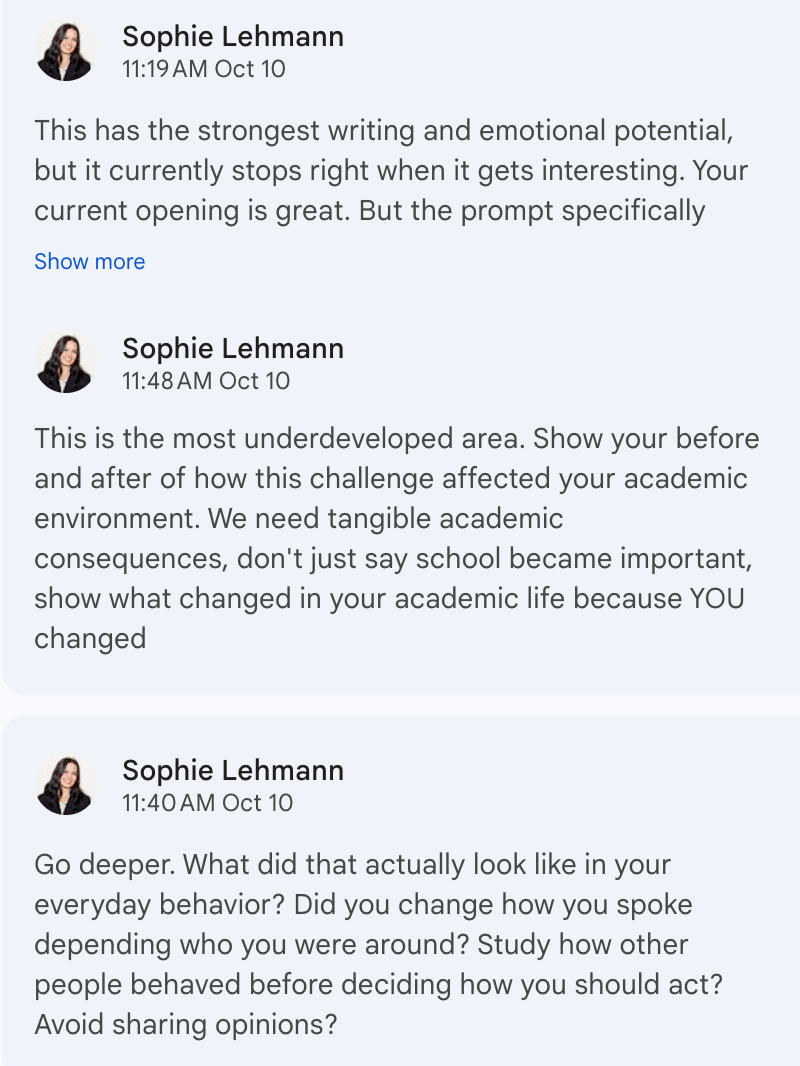
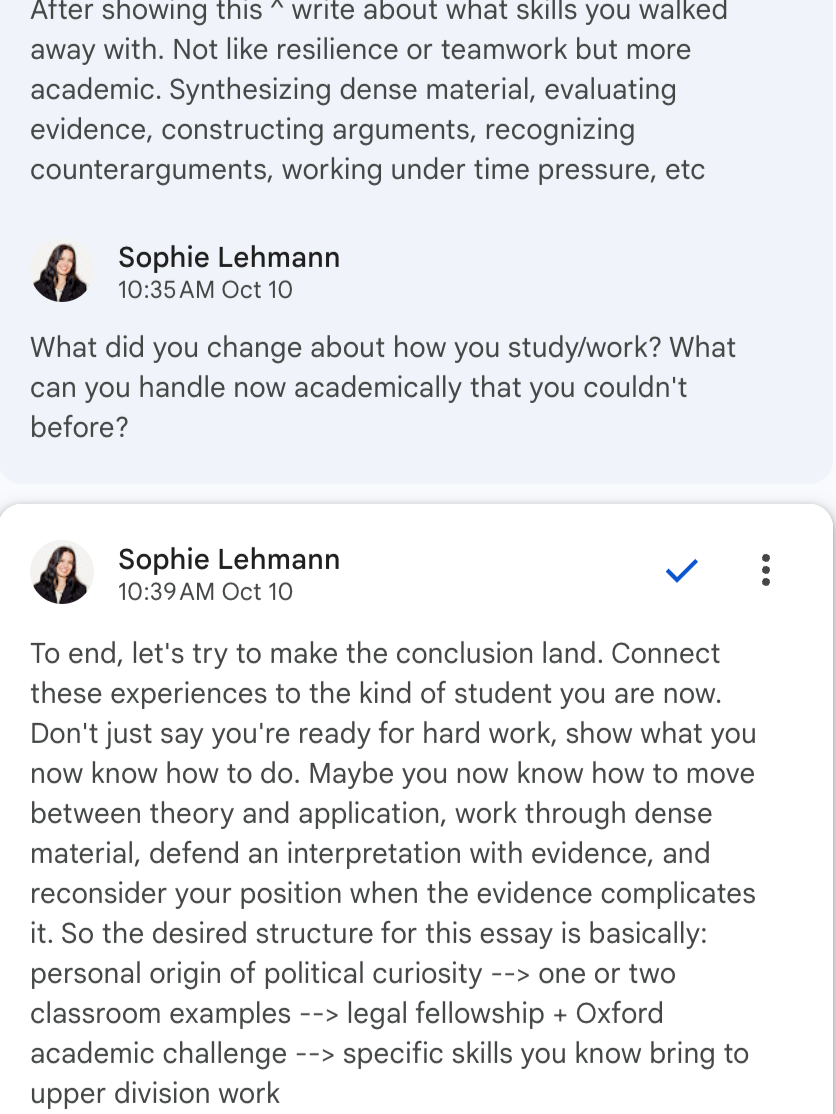
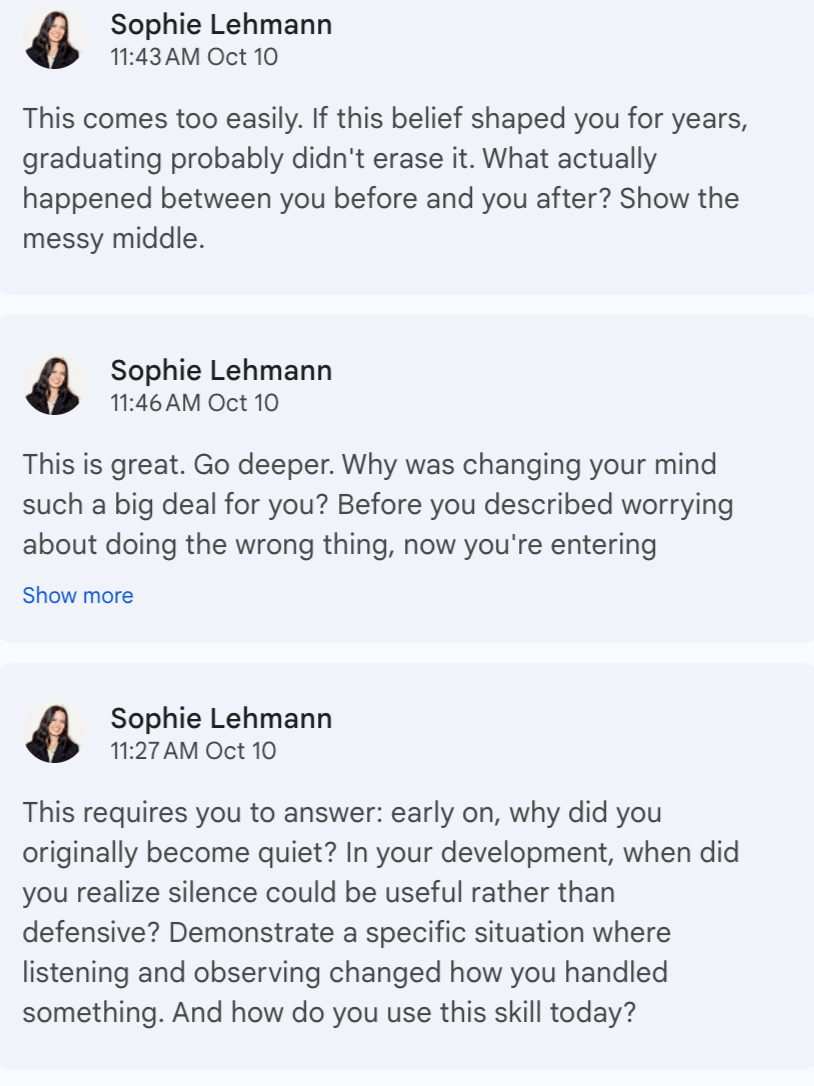
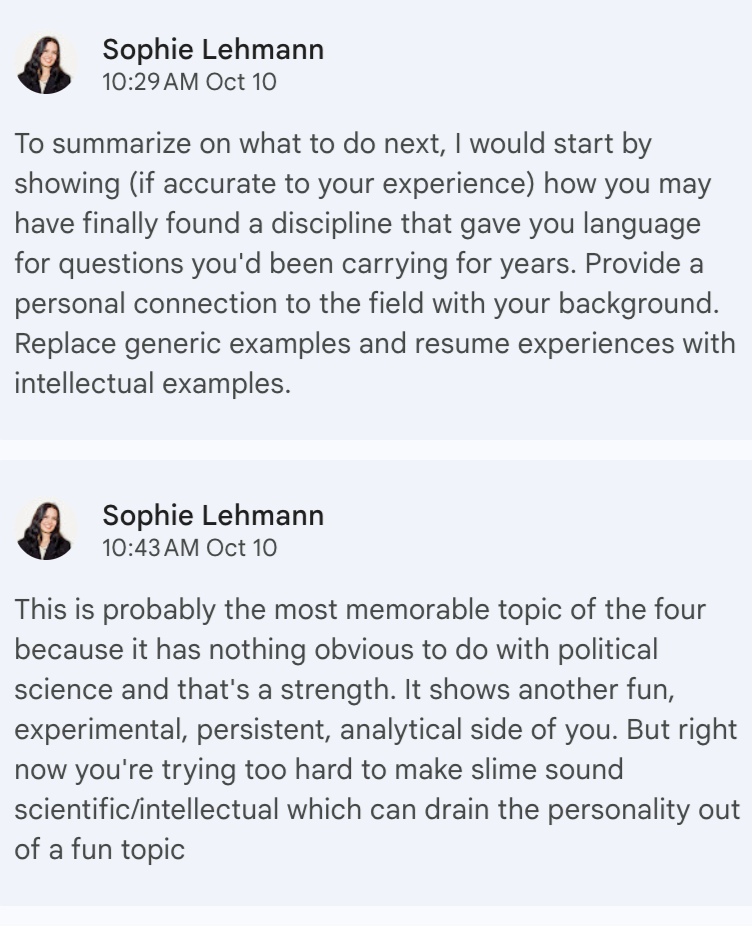
Example Feedback
Ultimate College Essay Rulebook • $17
A complete 96 page step by step PDF workbook with 41 chapters, written exercises, before and after examples throughout, and MORE!
Perfect for students starting from scratch, students with a draft that feels generic, and anyone who wants to understand what makes an essay memorable and exactly how to accomplish that.
What’s inside?
A clear roadmap with time estimates and a way to know when you’re done
40 prompts to dig up moments you’d never think to write about
Guides for common topics (sports, grandparents, moving, service trips, failure) with angles that stand out
Questions that take you past “it taught me perseverance” to what your story really means
A method for showing growth instead of just stating it
A blueprint plus tips for openings, middles, turning points, and endings
A full model essay with notes on why each part works
One essay edited from first draft to final, with comments at every step
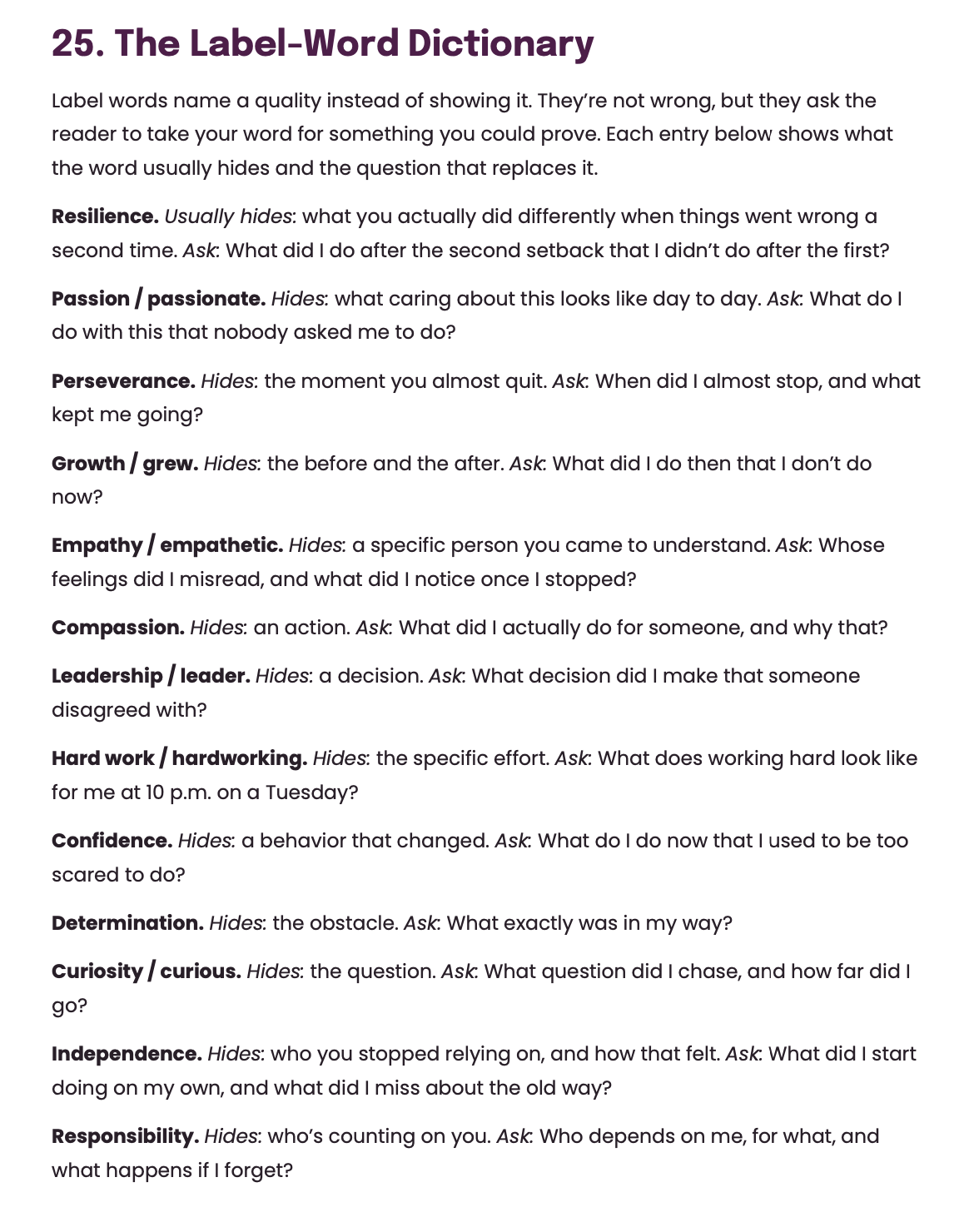
A guide to vague words like “resilience” and “passion” and what to write instead
40 weak phrases and patterns, each with a better question to ask
How to cut words without losing your voice
A final checklist to run before you submit
And so much MORE!
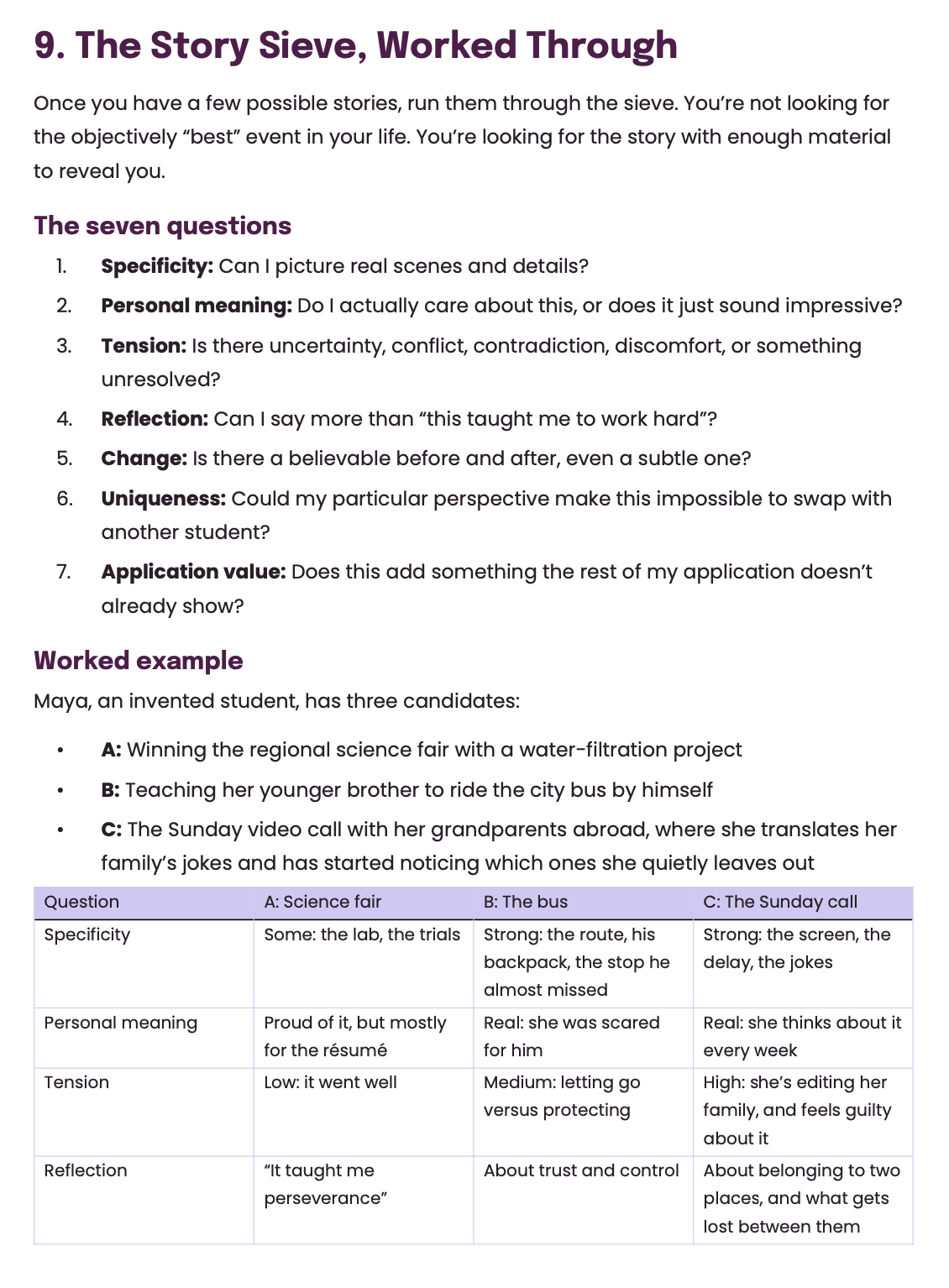
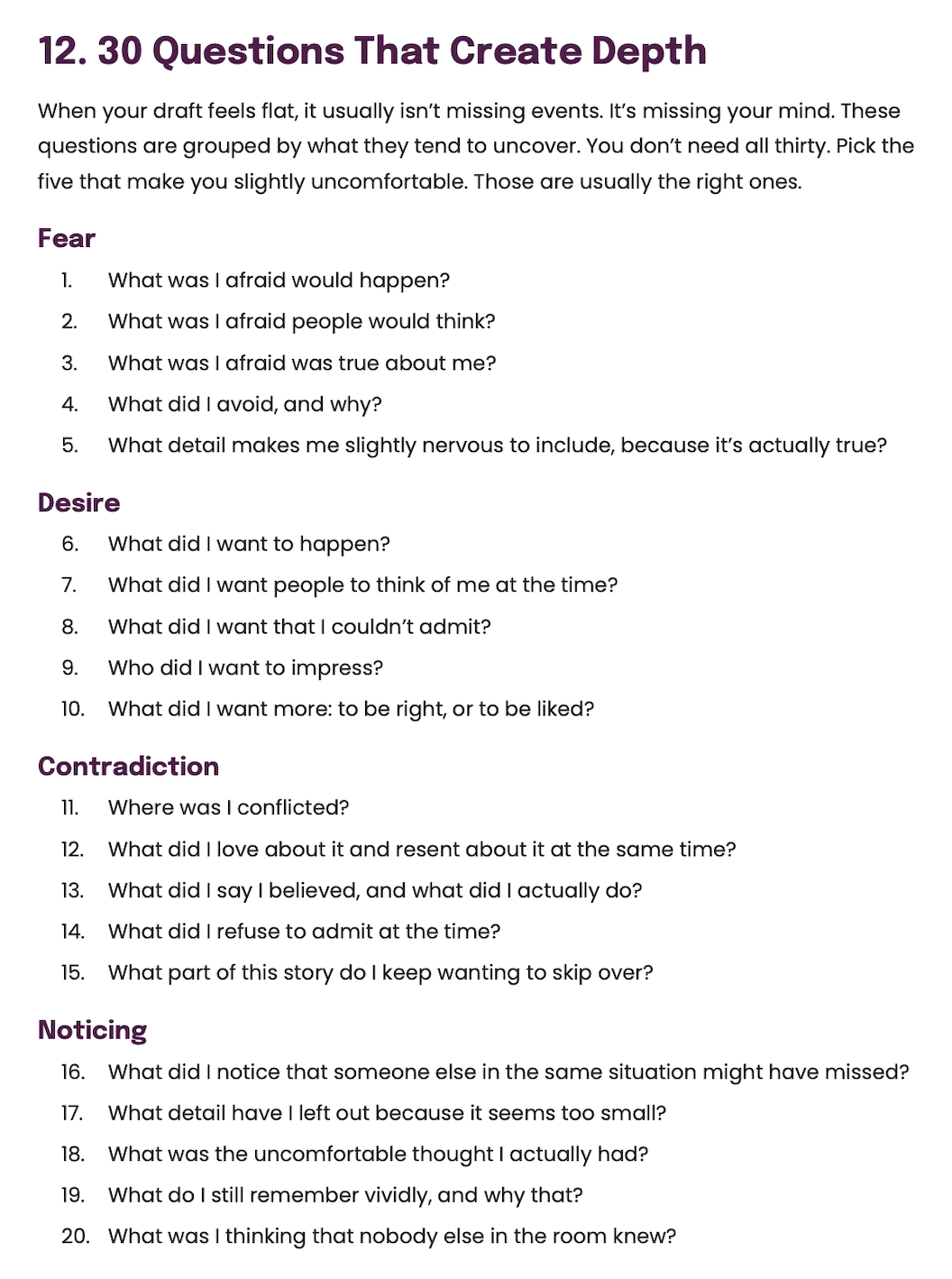
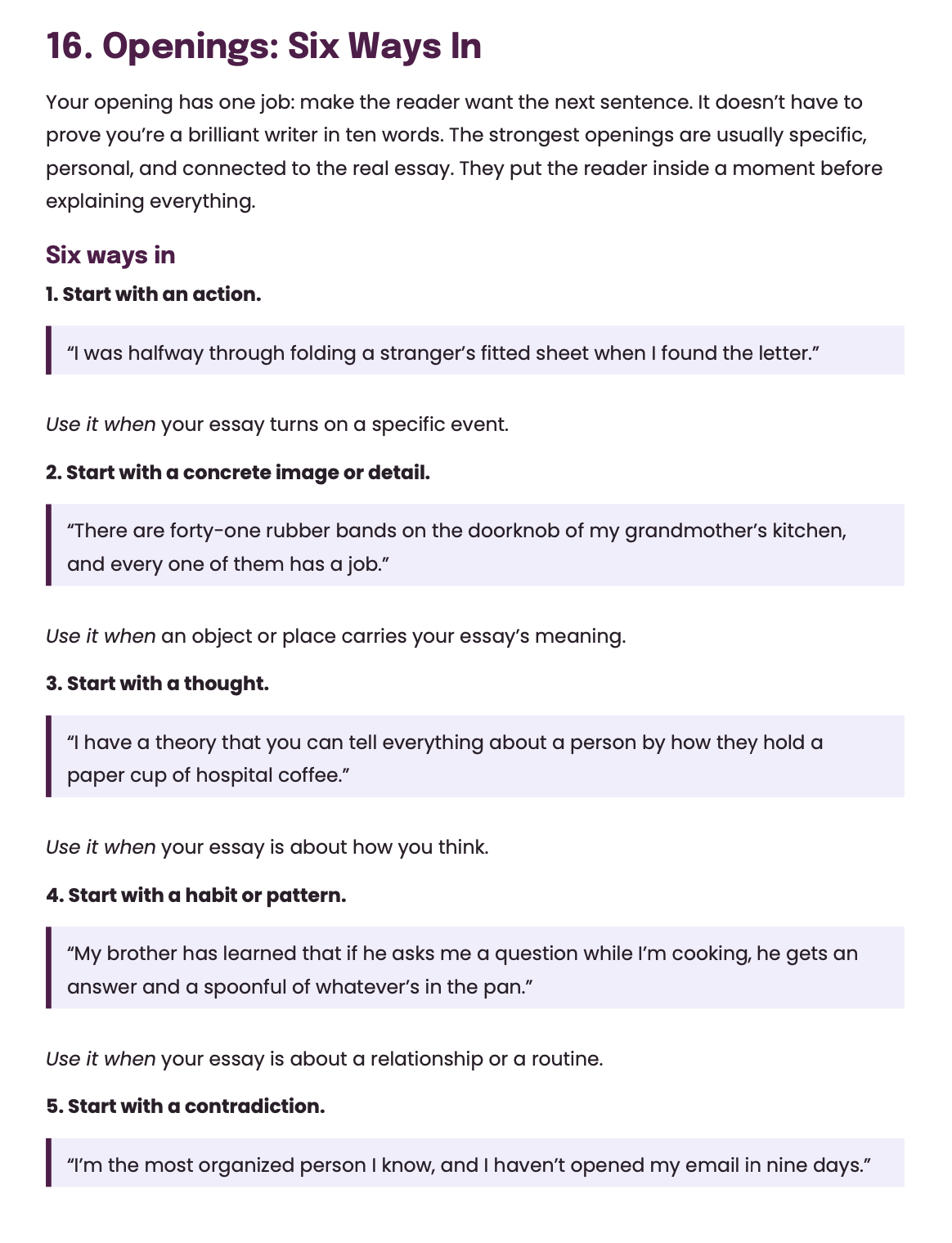
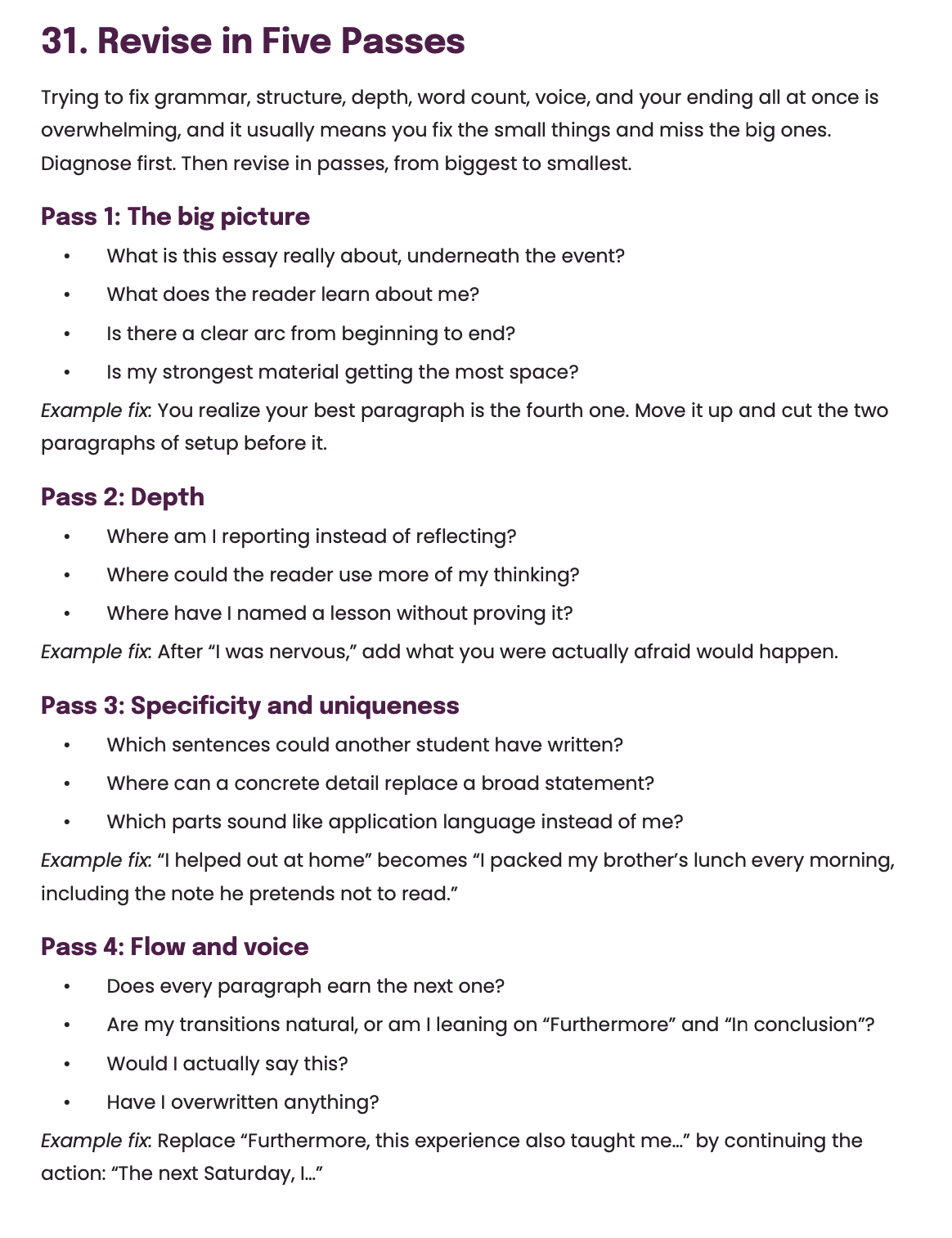
Example Pages
Essay Checkup • $47
A quick read of your essay or idea notes the way an admissions reader would. I’ll provide a few paragraphs of feedback on what’s working, what’s holding it back, and a roadmap of what to do next.
This does not include line by line & in depth comments, grammar and spelling corrections, or a second round.
Essay Diagnosis Package • $127
One complete, in depth round of line by line feedback in your own Google Doc. You’ll know exactly what’s working, what isn’t, and exactly how to fix it. I focus on providing questions and examples to help uncover your unique details and perspective.
This option is for the 650 word personal statement.
Essay Transformation Package • $247
Includes everything in the Essay Diagnosis, plus two more rounds of feedback to ensure you’re submitting your best work. I’ll guide you every step of the way.
This option is for the 650 word personal statement.
Supplemental Transformation Package • $137
3 rounds of personalized feedback on one supplemental essay, up to 350 words.
Supplemental essays may be shorter than your personal statement, but that doesn’t mean they’re easier to write!
With a limited word count, every sentence needs to have a purpose. Each supplemental prompt is asking for something different. A strong response needs to answer the actual question while still revealing something meaningful about you.
Why work with me when Google and AI exist?
Nothing replaces having an experienced person read your essay closely, ask the questions you haven’t thought to ask yourself, recognize what is missing, and push you deeper while protecting your own voice. That’s where I come in.
I’ve worked with hundreds of students and read essay after essay at every stage of the process. I know what it looks like when an essay has a great story but stays too surface level.
I can tell when the most interesting part of a student’s story is buried in one sentence they almost overlooked.
I notice when the writing sounds impressive but doesn’t actually reveal the person behind it, when a lesson feels forced, when a paragraph could have been written by any applicant, or when a student is explaining the wrong part of their story.
My job is to find what is already interesting about you and help you bring more of it onto the page.
Every essay I review and help edit is done personally by me. You’re getting my eyes, my judgment, and feedback specific to your story and writing.
The Most Common First-Draft Mistakes
I see these in almost every first draft. Each one has a fix.
The résumé essay. A walkthrough of an activity or award. Fix: find one moment inside it that shows how you think.
The lesson is told, not earned. “This taught me resilience.” Fix: show the moment and let the reader reach the word.
The essay is about someone else. Three paragraphs on your grandmother, one on you. Fix: keep asking what the relationship reveals about you.
Pain without reflection. A hard experience told in detail, with little about your thinking. Fix: ask what it revealed about your choices and beliefs.
Generic claims. “I’m passionate about helping others.” Fix: replace the label with evidence so specific the reader could name the quality.
Open your essay and run these three tests:
The swap test. Pick any sentence. Could another applicant paste it into their essay unchanged? If yes, it isn’t doing its job yet.
The human-being test. After reading your essay, could someone describe how you think, not just what you did?
The depth test. Does your essay stop at what happened? Or does it reach what you believed, what you got wrong, and what changed?